Showing posts with label nature. Show all posts

Wednesday, 23 December 2015

Save Tapirs and Apes to Combat Climate Change!

Nias as a young baby. His species, the Malayan tapir, actually have a role
to play in climate change! (Taken at Port Lympne, December 2014)


No Monkey Business

What link may a tapir, a gibbon and a polar bear have? The answer is "climate change", as crazy as it sounds. This article by The Guardian (Carrington, 2015) discusses a recent study by the University of East Anglia that shows that the disappearances of large animals, such as tapirs and primates, could have enormous impacts on climate change (and that's where the polar bear, which is famously vulnerable to climate change, comes in). 
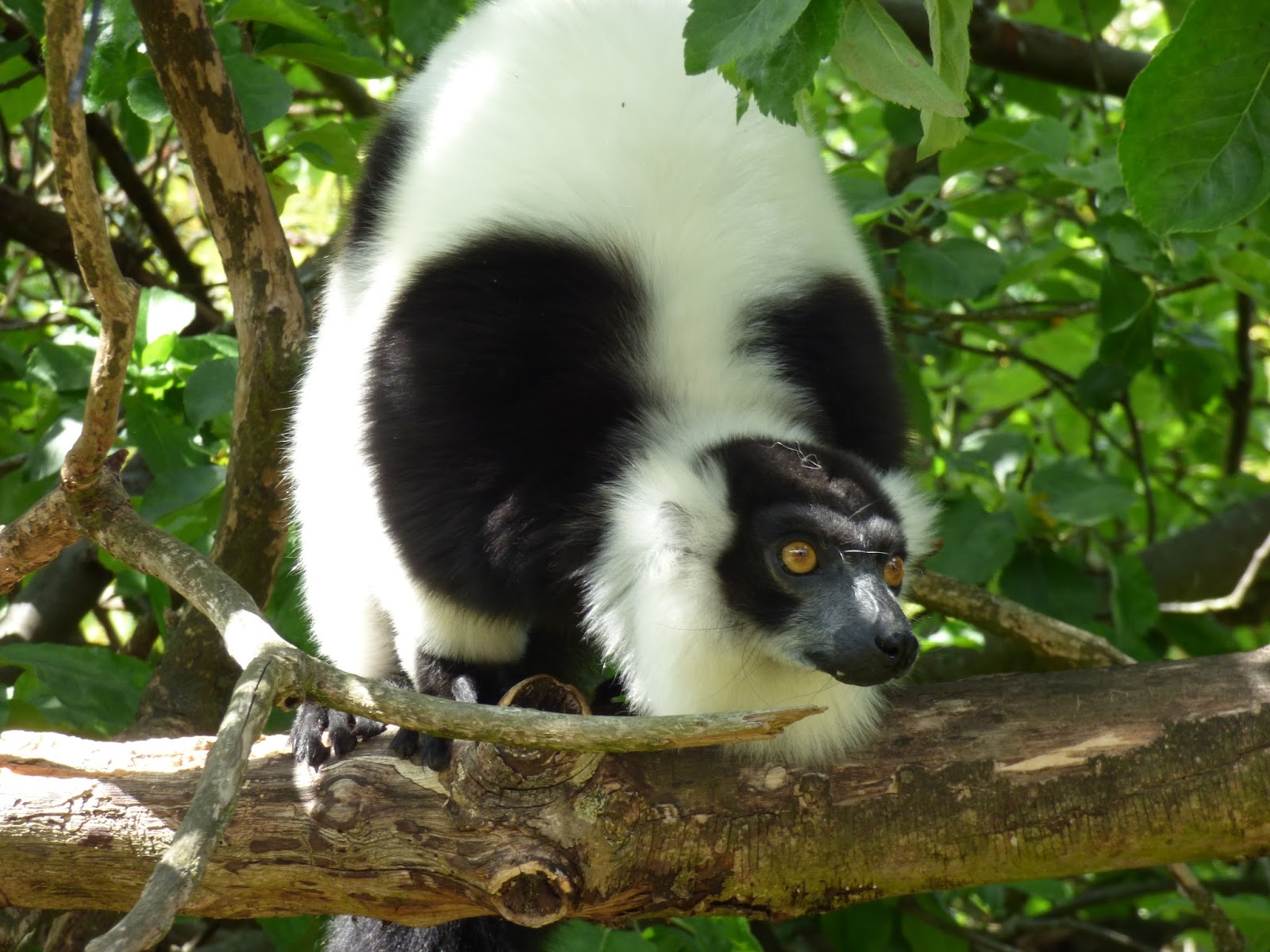
Aramis, a black-and-white ruffed lemur at Howletts (July
2015). The extinction of primates would have devastating
consequences on fighting climate change.
Tapirs are large, forest dwelling, fruit eating ungulates. Most species live in South and Central America, and the highly endangered Malayan tapir is found in South-East Asia. Additionally, the majority of the world's forest-dwelling primates (not just monkeys, but the great apes, gibbons, lemurs, etc.) and some large birds (such as toucans) eat fruit. This simple fact is why they're absolutely essential. The undigested seeds will be passed on through their faeces onto the forest floor, allowing new hardwood trees to be sowed- seed dispersal as its most natural!


So, What's It To Do With Climate Change?

The study, conducted in Brazil, found that where the tapirs and monkeys had disappeared, so had the hardwood trees. Instead, smaller species, such as bats, were dispersing the seeds of smaller softwood trees; these then replaced the hardwood, disturbing the natural mix between the two types of tree. The larger hardwood trees have more capacity to store carbon. Such a dramatic change in the ecosystem led to a 10-15% decrease of carbon storage!  

All species of tapir are considered to be threatened with extinction (IUCN, 2015), and another recent study showed that over half of primates face the same fate (Echaves, 2015). Therefore, we face yet another massive problem in combating carbon emissions.

We all know that the fight against climate change is complex. To combat it, we must reduce deforestation and deviate away from our dependence on fossil fuels, among other things. It seems that now, we must also turn our attentions to protect those wonderful rainforest species from extinction!

Emba, a Western lowland gorilla at Howletts (July 2015). Keeping
great apes from extinction is vital to combat carbon emissions! 

References

Carrington (2015) Loss of monkeys and birds in tropical forests driving carbon emissions Available at: http://www.theguardian.com/environment/2015/dec/18/carbon-emissions-loss-of-monkeys-and-birds-in-tropical-forests Date accessed: 23rd December 2015

Echaves (2015) Over 50 Percent Of The World's Primate Face Extinction Available at: http://www.sciencetimes.com/articles/7792/20151126/over-50-world-s-primate-face-extinction.htm Date accessed: 23rd December 2015

IUCN Red List of Threatened Species (2015) Tapirus bairdii Available at: http://www.iucnredlist.org/details/21471/0 Date accessed: 23rd December 2015; Tapirus indicus Available at: http://www.iucnredlist.org/details/21472/0 Date accessed: 23rd December 2015; Tapirus pinchaque Available at: http://www.iucnredlist.org/details/21473/0 Date accessed: 23rd December 2015; Tapirus terrestris  Available at: http://www.iucnredlist.org/details/21474/0 Date accessed: 23rd December 2015

Monday, 30 November 2015

Will The Lion Sleep Tonight?

Already extinct in the wild... Layla (front) and Jabir, the pair
of Atlas lions at Howletts (August 2015)


The Last Roar

Milo the Atlas lion at Port Lympne Reserve-
a very special cat indeed (July 2014)
If there was one sound during my time at The Aspinall Foundation that I found I was lucky to hear, it was the mighty roars of the lions that echoed around the parks. These lions are not the "ordinary" African lions, They're Barbary, or Atlas, lions, formerly found in North Africa. They are much larger than African lions, and have impressive dark manes.

They are already extinct in the wild, and there are very few in zoos around the world. 

Now immediate efforts must be taken to ensure that the remaining lions do not end up the same way.

The King Needs Help!


Asiatic lions, found only in India, are considered to be Endangered (IUCN, 2015). However, thankfully, their numbers are reasonably stable.

African lions, in sub-Saharan Africa, are Vulnerable and declining in numbers- at a very rapid pace. (IUCN, 2015) 

Spike, an African lion at Whipsnade Zoo (October 2013)
Most notably, lions have decreased by 89% since 1993 in Nigeria, leaving just 32 individuals in this country. Kenya and Tanzania have also suffered losses of 40% and 66% respectively (Fair, 2015). As the human population continues to expand, human-lion conflicts become more evident. Habitat loss through burning, tree felling and urbanization is a real problem. The loss of prey is also a major factor; this is partly down to habitat loss, but mainly down to poaching and the bushmeat trade (IUCN, 2015). As their natural prey declines, lions may turn to livestock, resulting in shootings and poisonings, either in self defense or for the protection of livestock.

(Nearly) Sleeping lions, Layla (front) and
Jabir (July 2014)
However, there are just a few southern African countries (namely, South Africa, Zimbabwe,  and Namibia) that have seen a rise in the number of lions, and they've all done it differently. Fair's article (2015) discusses how South Africa has fenced their lions from the human population. This has apparently led to a decrease in the lion-human conflict; fencing the reserves therefore appears to have served both the locals and the lions well. If we are to protect an apex predator, then the concerns of local people must also be addressed. Additionally, it appears to be economically viable. The article points out that fenced reserves could cost $500 per square kilometre (whereas unfenced would cost four times as much). Furthermore, the fenced reserves could protect 80% of the potential lion population density (compared to just 50% in unfenced populations).

Nonetheless, this is not a black-and-white issue. Namibia does not fence lions due to its low human population, meaning there is comparatively little human-lion conflict. Zimbabwe's lion population has soared since the 1990's. This is not due to a highly controversial trophy hunting economical model in the Bubye Valley Conservancy (I am absolutely not condoning trophy hunting at all for the record).

As it always is with apex predator conservation, it is far from simple. Do we really want to see lions fenced and semi-wild? Do we want to save them through controversial trophy hunting?

It raises some very difficult questions, but we absolutely cannot let them end up like the Atlas lions.


Bless you, Layla! (August 2014)


References

Fair, J. (2015) Is It Time To Stand Up For All Of Africa's Lions? BBC Wildlife, October, pp.52-54

IUCN Red List of Threatened Species (2015) Panthera leo ssp. persica Available at: http://www.iucnredlist.org/details/15952/0 Date accessed: 28th November 2015; Panthera leo Available at: http://www.iucnredlist.org/details/15951/0 Date accessed: 28th November 2015


Monday, 16 November 2015

Cinderella Species Matter Too!

The Critically Endangered Philippine Crocodile at Paignton Zoo (May 2015).
There are only 250 left in the wild, but they're not likely to be a poster
child for conservation!

Mirembe, the youngest member of the African elephant
herd at Howletts Wild Animal Park (14 months in this
photo, August 2015). Her herd, the largest in the UK,
is one of the most popular draws to the park, along with the
world famous gorilla collection.

What Is A Cinderella Species?

What comes to your mind when you hear the term "endangered species"? 

Do you think of the scimitar horned oryx, painted dog, humphead wrasse, Cuban crocodile, porbeagle, eastern bongo, Golden mantella frog, American burying beetle, or even a plant?

Or is the first thing that springs to your mind something along the lines of a tiger? African elephant? Gorilla? Whale? Panda? Orang-utan? Sea turtle? Snow leopard? 

A lot of attention and money is spent on the latter species, the charismatic fauna that normally are the first few animals that pop up on a quick "endangered species" Google Images search. They are the species that we see when we turn the television on and see a WWF adoption advert, and they are the species who we, as a society, are most likely to dig deep into our pockets for. The WWF, one of the world's largest conservation bodies, had an income of £46.43 million in 2009, 46% of which came from individual donations and memberships (n.d.). The organisation uses the aforementioned charismatic megafauna to bring in donations, and uses the giant panda as its logo.

However, what about the Cinderella species? These are the species not seen as being as charismatic. These are the "forgotten species" that are just as endangered (or if not, more so) as the charismatic megafauna such as pandas and tigers. Yet they do not get nearly so much publicity or attention, and therefore do not get so much money spent on their conservation.  

However, it by no means mean they're less important. In fact, it's the complete opposite. They deserve much better. 

Why Do They Matter?


Now let's also look at a specific Cinderella species, a special antelope species at Howletts Wild Animal Park (where I volunteered for the education department over the summer).
One of two Eastern Bongo calves at Howletts Wild Animal
Park (July 2015)

The Eastern, or mountain, bongo is a Critically Endangered antelope species. This is unlike the western, or lowland, bongo, which is not currently threatened (IUCN, 2015). Found only in Kenya, there are only around 150 of them left in the wild. They've been relentlessly poached, and have also fallen victim to habitat destruction. Sadly,  when informing the public of their plight in the wild, very many were surprised and unaware that it was more endangered than our pair of Sumatran tigers! Yet, like so many others, the species does not generally get the publicity is very much deserves. When was the last time you turned the television on and saw an advert asking you to adopt an Eastern bongo?

Why would it matter if this creature goes extinct?  

Think of the ecosystem as one giant, complicated jigsaw puzzle. It needs every single piece to be present, in the correct order, so that it can work and be complete. Let's use a West African rainforest as an example. First, you would need the soil and all its inhabitants to be present. Without this, forget everything else. Then, you would need the plants to fill in parts of the jigsaw- not just the enormous trees, or the beautiful flowering ones, but the ferns, the shrubs, the bushes, etc. Then you'd need the insects, and so on, and so forth. Eventually, the jigsaw would be complete, and you'd be able to see a healthy, functioning ecosystem which also contains the charismatic megafauna such as forest elephants, gorillas and leopards.

In the ecosystem, nothing is more important than another. They're equal. All organisms- no matter how small or large , how scary or hairy, how beautiful or ugly- matter just as much! 


Indah, the gorgeous Sumatran tiger at Howletts Wild Animal Park
(June 2015). Her species would not be able to survive without
the Cinderella Species that hold her ecosystem together! 

References

IUCN Red List of Threatened Species (2015)  Tragelaphus eurycerus ssp. eurycerus Available at: http://www.iucnredlist.org/details/22058/0 Date accessed: 16th November 2015; Tragelaphus eurycerus ssp. isaaci Available at: http://www.iucnredlist.org/details/22057/0 Date accessed: 16th November 2015
WWF (no date supplied) Income and expenditure Available at: http://www.wwf.org.uk/about_wwf/other_publications/annual_review_archive/annual_review_2009/raising_support/income_and_expenditure/ Date accessed: 16th November 2015

Tuesday, 20 October 2015

Plastic fantastic?

The beach at Looe, Cornwall (October 2015). Note the plastic in the seaweed!

Plastic Oceans

Just a tiny fraction of the amount of the litter James and I
cleaned up on Dover beach (January 2015)
It was a bitterly cold early January 2015 morning, and my friend and I met on Dover beach for a quick beach clean. We were only there for approximately fifteen minutes, yet the amount of rubbish that we managed to collect was absolutely astonishing. You name it, we found it. Dummies, discarded fishing tackle, bags, toys, straws, cans... Sadly, this is not an isolated incidence. This international marine litter crisis is not just an eyesore. It is an enormous problem that has the potential to harm you!


8 million tons of plastic enters the oceans every year and the problem is getting worse! (ecowatch, 2015)


The world's top sources of plastic pollution (National Geographic)


WARNING: THE FOLLOWING VIDEO MAY BE DISTURBING AND CONTAINS STRONG LANGUAGE.

The Age of Plastic

Over summer 2015, this harrowing video of a turtle with a straw wedged in its nose went viral on social media. The boat crew can be seen trying to remove it, while expressing their disgust at how something as simple as a straw can cause so much harm. Unfortunately, this is nothing new. This website shows you that millions of sea birds and creatures will die annual as the result of plastic pollution in the oceans.

Turtles are famously common victims to plastic pollution. . 6 of the 7 sea turtles are considered to be very threatened with extinction. (the 7th has insufficient conservation data). 

Not Just a Wildlife Issue...

Marine plastic pollution can refer to anything from plastic bags to the microbeads found in cosmetics and toiletries. All types of plastic eventually break down before being consumed by marine life. It can bioaccumulate in the marine food chain, before it eventually ends up on your dinner plate- obviously not very good for you! This picture sums it up beautifully. 

The problem with plastic in the oceans- not just an oceanic problem, but a very unhealthy
one for us! (Biodesign Institute at Arizona State University)

What Can I Do?

Reduce your plastic consumption!

All countries in the United Kingdom now have a 5p plastic bag charge; England joined in on the 5th October. Today (20th October 2015) it was announced that Scotland has seen an 80% in plastic bag usage since the charge was introduced, and it is also a similar story in Wales. This is a great start, and if it does a little bit to reduce pollution, then great. However, there is still so much to do, and things you can do to help. 

* Microbeads need to phased out from cosmetics 
* More recycling, less "throw-away" culture
* Reduce the usage of plastic bottles
* Say no to a straw, say no to a plastic bag! 
* Reuse your plastic goods 
* Do a beach clean

 Basically, in the words of the Marine Conservation Society...

Marine Conservation Society


References

ecowatch (2015) 8 Million Metric Tons of Plastic Dumped Into World's Oceans Each Year Available at: http://ecowatch.com/2015/02/16/8-million-tons-plastic-dumped-into-oceans/ Date accessed: 20th October 2015


Monday, 19 October 2015

Killer Seagulls?

A juvenile gull in Looe, Cornwall (October 2015)

Seagull Mania

I am used to "seagulls". I grew up in Dover, and now study and live in Plymouth. Neither towns exactly have a shortage of gulls, so I am more than accustomed to their noises and their seemingly predatory habits of snatching chips and pasties from your hands. 

But, whereas I don't really mind "seagulls", there are plenty of people who despise them. The media is part of the anti-seagull brigade, too, and this year (2015), seagulls seemed to be public enemy number one. Even David Cameron became involved; as this news article from the Guardian shows, he called for a "big conversation" as there were talks of a gull cull.


The Human Impact

Juvenile herring gull outside the National Marine Aquarium, Plymouth,
November 2014

What we as a society don't want to acknowledge (or admit?) is that the "thug" behaviour of gulls is a reflection of our own activity. The deaths of the dogs and tortoise as mentioned in the article are, of course, tragic, and the behaviour of the gulls cannot be ignored. However, it is of vital importance to discuss why "seagulls" are behaving the way they are, and how the media has an agenda against them. While the article does talk about the conservation status of herring gulls, there is little attempt to discuss the reasons behind the "aggressive" and "problematic" behaviour of seagulls. 

Black-headed gull (summer
plumage) Fountains Abbey, Ripon,
North Yorkshire, April 2015
Before I move on, "seagulls" don't really exist. The term generally applies to herring gulls and lesser black-backed gull, the two most familiar types of gull. Also, it is vital to address that their numbers are NOT booming, contrary to the hype and misinformation in the media. In fact, just like the majority of British wildlife, both types of gull are in real trouble. The conservation status of the herring and lesser black-backed gulls are Red and Amber respectively, meaning that they have both suffered a significant decline and range reduction (RSPB, n.d.). Of course, there are other species of gull, such as the black-headed and greater black-backed, but they don't receive nearly so much bad publicity. 


As you can see, I have posted a photo of a black-headed gull in Ripon, North Yorkshire, which is very far from the sea. This is a common trend, and is a symptom of what our activities have done to the sea (as little as we would like to admit it). If you've ever had a pasty stolen from your hands by a gull, or seen them hanging around near bins, you would know that they're opportunists, and that's where we as a society have created a problem.

- The WWF states that over 85% of the world's fish stocks are fished to or beyond capacity (2015). This means that the main natural food source of seagulls is removed and the ecosystem is profoundly affected. This means that the gulls are moving further inland to find their food sources (hence why they're in Ripon!).

Herring gulls surround a fishing boat in Looe, Cornwall
(March 2015)
- Poor fishing practices, such as gutting the fish onshore, attracts seagulls and encourages them to scavenge and use their opportunistic behaviors.

- Poor management of waste, particularly food waste attracts seagulls! So by dropping the odd chip on the ground here and there, seagulls are encouraged to scavenge where there are people. Similarly, actively feeding the gulls is not such a good idea as it provides further encouragement.

Gulls are not normally aggressive. Most of the attacks occur in the early summer, which is when their nesting and brooding season is!


No Gull Cull!

So, with regards to the talks of a gull cull, it is a silly idea and would solve very little. 

Before we point at seagulls, we must resolve our own bad behaviour to rectify the issue!


* We MUST discourage people from feeding the seagulls!
* Better management of waste, particularly of food waste
* Tighter regulations on the gutting of fish on the coast
* More sustainable fishing practices- not just to discourage seagulls, but for the entire ecosystem

Therefore, we need to admit that we have made this problem ourselves, and culling them is simply not the answer!

References

The Guardian (2015) Seagull attacks: David Cameron calls for "big conversation" about issue Available at: http://www.theguardian.com/politics/2015/jul/18/seagull-attacks-david-cameron-big-conversation Date accessed: 19th October 2015

Royal Society for the Protection of Birds (no date supplied) Herring Gull Available at: http://www.rspb.org.uk/discoverandenjoynature/discoverandlearn/birdguide/name/h/herringgull/ Date accessed: 19th October 2015; Red, Amber and Green Explained Available at: http://www.rspb.org.uk/discoverandenjoynature/discoverandlearn/birdguide/status_explained.aspx Date accessed: 19th October 2015

World Wildlife Fund (2015) Overfishing Available at: http://www.worldwildlife.org/threats/overfishing Date accessed: 19th  October 2015

Wednesday, 5 August 2015

Butterflies, beauties of the insect world

I love a butterfly. 

There's just something about them. Perhaps it's the way that they appear to symbolise the spring and the summer? The way that they flutter around seemingly unaware of our presence? Their deadly important role in our ecosystem? The scarcity of some British species?

Whatever it is, I am absolutely fascinated by them, and can easily say that they're some of my favourite British wildlife.Yet, like a lot of things on these islands, they are in a lot of trouble, with several species in alarming decline and their ranges also declining. The reasons are varied. Loss of wildflower meadows, of which we've lost over 98% of such habitats. Pesticides and agriculture. Pollution. The usual story. But before I discuss that and what you can do to help butterflies where you live, I want to showcase some butterflies I have photographed in the UK.


Small Pearl-Bordered Fritillary

Coverack, Cornwall, June 2015

Coverack is a stunning seaside village on the Lizard Peninsula in Cornwall. My family has been going there since before I was born, and it never really gets boring. It's beautifully quiet, and for such a small place, has a lot to offer. There's Roskilly's ice cream, the Paris Inn, the Old Lifeboat House restaurant and a variety of adorable little gift shops littered around the place. There's also plenty to offer for little adventures, too. There's Chynalls Point, for instance, which rewards you with beautiful views of the village and the sea (as well as ponies that have attempted to eat my camera straps a few times!). That's where I saw this beautiful, rare butterfly. 
The Small Pearl-Bordered Fritiallary is listed as a Priority Species by the Biodiversity Action Plan, and Butterfly Conservation (which obviously looks after British butterflies) lists it as a species with conservation priority. It's declined by over a third since the 1970s. I was pleasantly surprised to see this butterfly as we sat at Chynalls Point, taking in the magnificent view, and managed to get a fair few shots that I'm quite proud of. 
Hello, Handsome!

Those underwings <3
We also spotted a male common blue and a speckled wood. They're beautiful butterflies, but thankfully they are nearly in so much trouble as the poser above!
Male common blue

Speckled wood

Dover's Butterflies

The White Cliffs

If there's one thing that Dover does well, it's the nature reserves. There's Lydden Temple Ewell, which is home to hundreds of bee orchids. Old Park Hill, where I used to volunteer with the Kent Wildlife Trust and you can see reptiles and birds of prey (I have a fond memory of being sat around the fire in the dead of December, eating a pasta salad while talking to the other volunteers, and watching the buzzards in the distance). Samphire Hoe, created from the waste when they made the Channel Tunnel, home to skylarks, peregrines, lizards, amphibians, orchids and all sorts of other beauties. Then there's the famous White Cliffs. If it's butterflies you're after, it's butterflies you'll get. And plenty of them (just watch out for the ponies!). I may be biased, but these are truly beautiful cliffs. 


Top to bottom: Male common blue, large white, meadow brown (although a little bit is telling me it could be a gatekeeper!)

More Butterflies

Peacock butterfly, Sutton-on-the-Forest, York, April 2015

Wall brown, Jennycliff, Plymouth, May 2015

Little heath, Samphire Hoe, between Dover and Folkestone, June 2015


So...

What can I do to help, I hear you cry?

The answer: LOTS AND LOTS.
As I've already pointed out, the UK has lost over 98% of its wildflower meadows, which are vital habitats for these charming insects. There are a few plants that you could put in your garden to attract butterflies. 
- Buddleia. We have a huge buddleia plant in our back garden, and every summer it is absolutely covered in butterflies. We've seen blue, peacock, comma, tortoiseshell, red admirals and large white butterflies among others, so it is worth it. 
- Lavender
- Orregano  

To provide your newcomers with as many nectar-goodness opportunities as possible...
... don't use herbicides and pesticides. Butterflies (as well as spiders and ladybirds) are very sensitive to these harsh chemicals
... plant your flowers in a sunny yet sheltered area. Butterflies love the sun, obvs, but they need to be able to settle on the plants rather than being windswept


There is also lots of very good advice on the Butterfly Conservation website. Please check it out. 

http://butterfly-conservation.org/292/gardening.html 


Over and out! Keep them butterflies fluttering!